
If you are weighing a hand-applied wall finish for your New Jersey home, three names come up again and again: Venetian plaster, Roman clay and limewash. They are all mineral-based, they all bring movement and depth that flat paint can't, and they are often confused with each other. This guide explains what each one is, how they compare, and which one fits the room you have in mind.
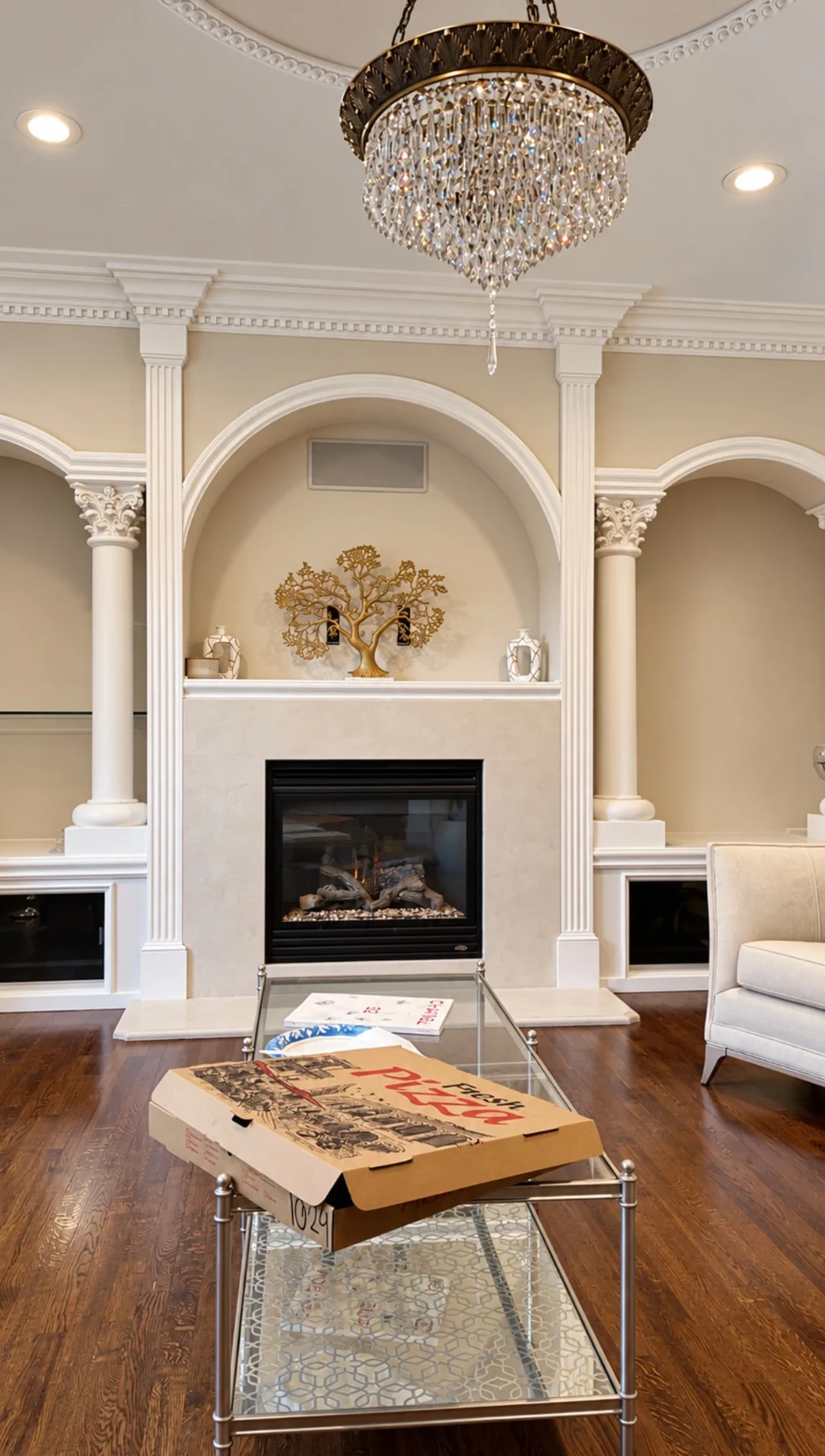 Renaissance Venetian plaster over a former marble fireplace — Franklin Lakes, NJ.
What Each Finish Is (In Plain English)
Venetian plaster
Venetian plaster is a lime-based plaster applied with a steel trowel in several very thin layers, then compressed and burnished. The result looks like polished stone or marble, with real depth you can see when light hits the wall at an angle. It can range from a soft satin to a high polish depending on the product and technique.
Roman clay
Roman clay is a trowel-applied finish made from lime and/or clay with fine aggregates. It is applied thinly and left matte or lightly burnished, giving a soft, suede-like texture with gentle tonal shifts. Think of it as the quieter, more understated cousin of Venetian plaster.
Limewash
Limewash is a mineral coating made from slaked lime and natural pigments. It is brushed on, not troweled, in multiple thin coats. As it cures it develops a cloudy, chalky look with visible brush movement. It is a coating, not a plaster — it adds color and movement but does not build up a textured layer.
Side-by-Side Comparison
| Venetian Plaster | Roman Clay | Limewash | |
|---|---|---|---|
| Look & texture | Polished stone depth, marble-like veining | Soft matte, suede-like texture | Cloudy, brushed movement |
| Sheen | Satin to high polish | Matte to low sheen | Flat, chalky |
| Best rooms & surfaces | Dining rooms, foyers, columns, fireplaces, feature walls | Living rooms, bedrooms, offices, accent walls | Whole rooms, ceilings, stairwells, brick |
| Water resistance | Good on splash areas when sealed; not for showers | Limited; protect in splash areas; not for showers | Breathable, not water-resistant; not for showers |
| Durability & touch-ups | Hardest-wearing; repairs need a skilled hand to match sheen | Moderate; blends well | Softer; easiest to blend and refresh |
| Maintenance | Gentle damp cloth; protective wax where specified | Light dusting; gentle spot cleaning | Dusting; avoid scrubbing |
| Application | Primer plus multiple troweled coats, then burnishing | Primer plus a few troweled coats | Base coat plus multiple brushed coats |
| Relative cost level | Highest — most coats and burnishing labor | Middle | Most approachable — fewer labor-intensive steps |
Where none of them belong: inside a shower. For showers and other wet areas, look at microcement or Tadelakt shower systems instead, and read our microcement shower cost guide.
Which Should You Choose?
- Formal dining room: Venetian plaster for polished depth, or limewash for a softer, old-world feel.
- Brick fireplace: limewash if you want to keep the brick texture visible; plaster if you want a smooth stone surface that covers the brick. See our limewash brick guide.
- Powder room: any of the three on walls outside the splash zone. Venetian plaster or a sealed finish handles touching best.
- Whole-home softness: limewash on walls and ceilings creates an even, airy feel through connected rooms and stairwells.
- Budget-conscious single room: limewash on one feature room usually delivers the most visual change for the labor involved.
Real Projects
Every photo below is from our own work, labeled with the actual finish and town.
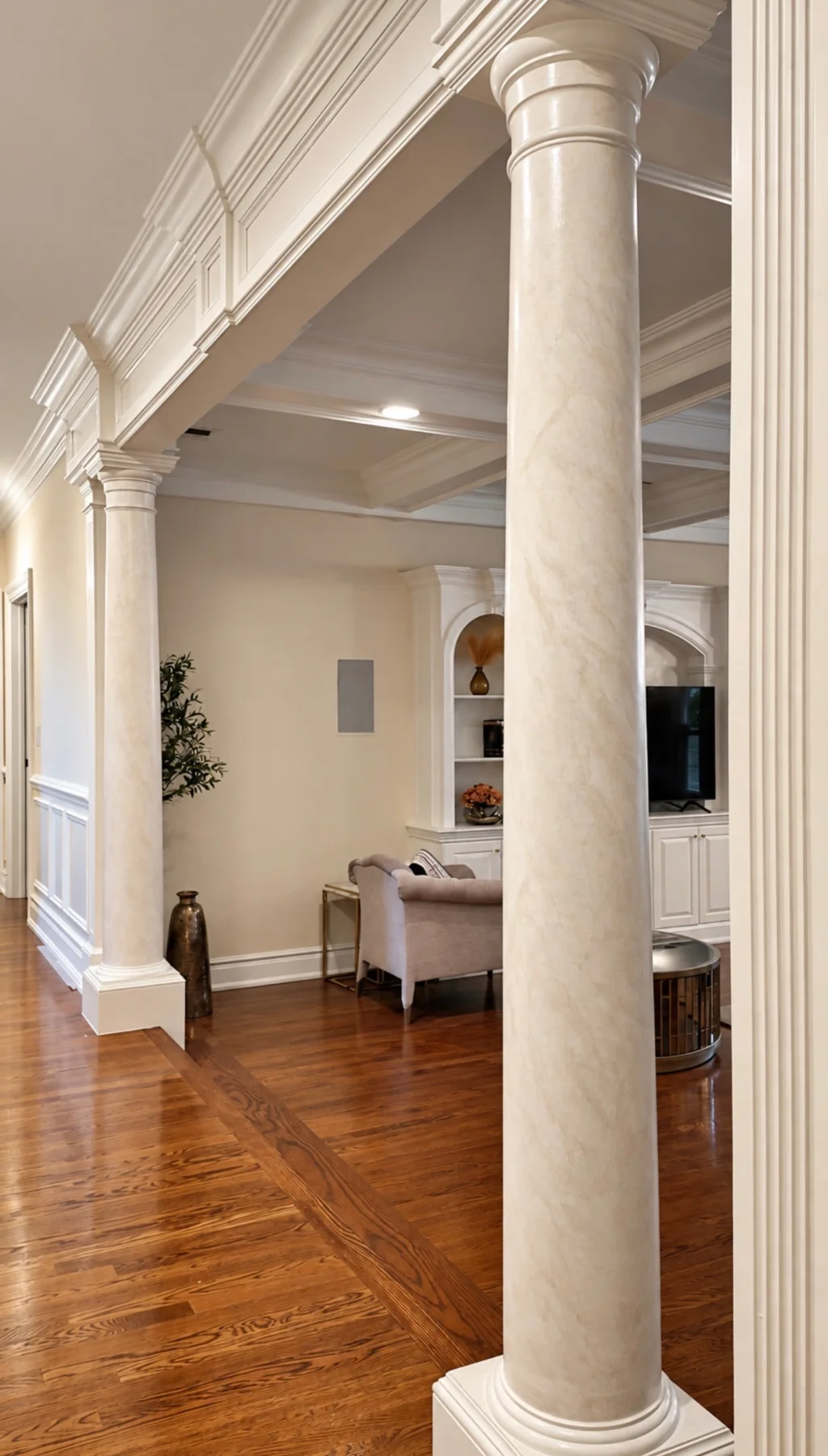 Venetian plaster: Renaissance Venetian plaster columns — Franklin Lakes, NJ.
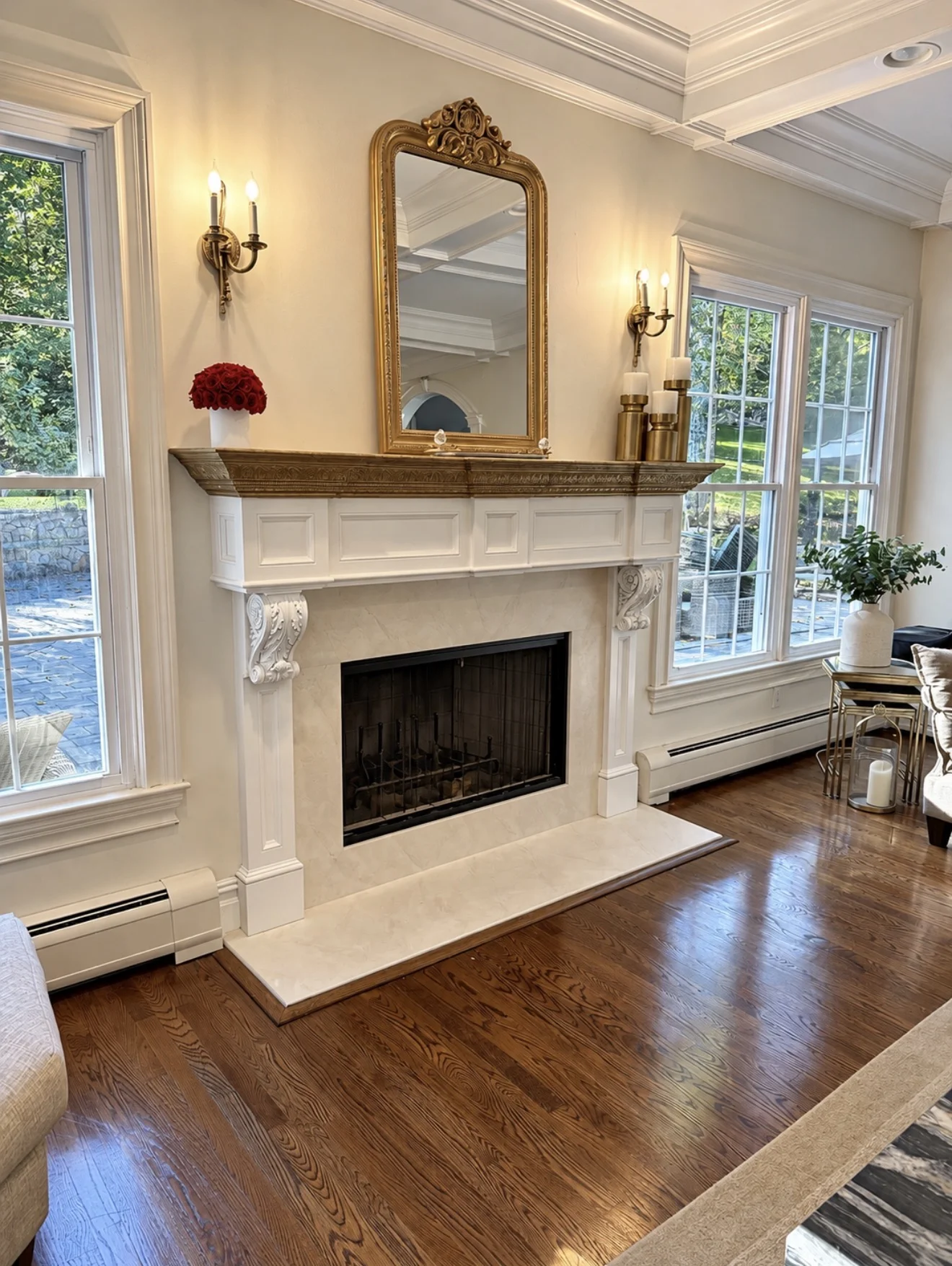 Plaster: Palladino stone-finish plaster fireplace — Franklin Lakes, NJ.
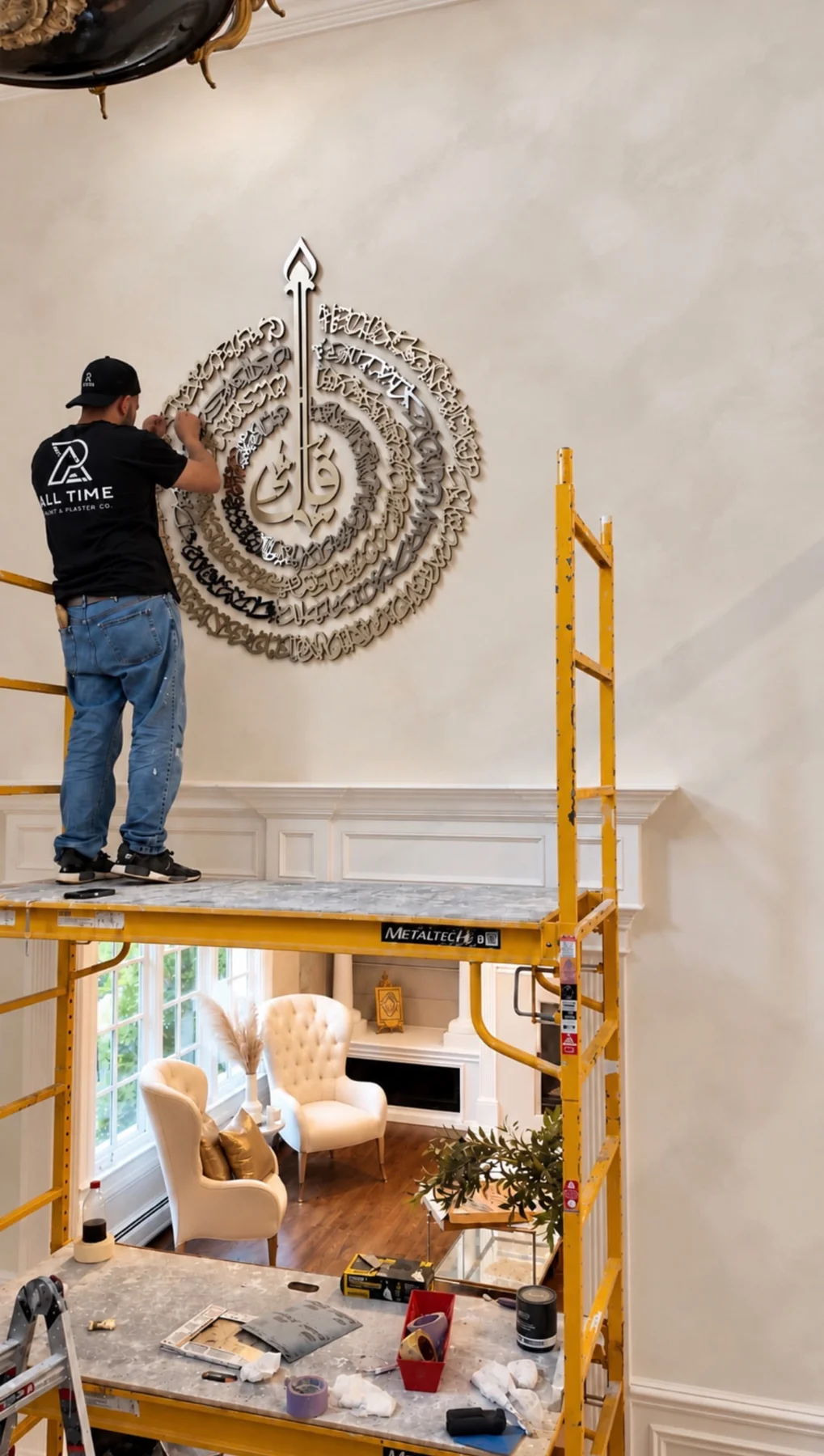 Limewash: two-story foyer in Creative White MC-748 — Franklin Lakes, NJ.
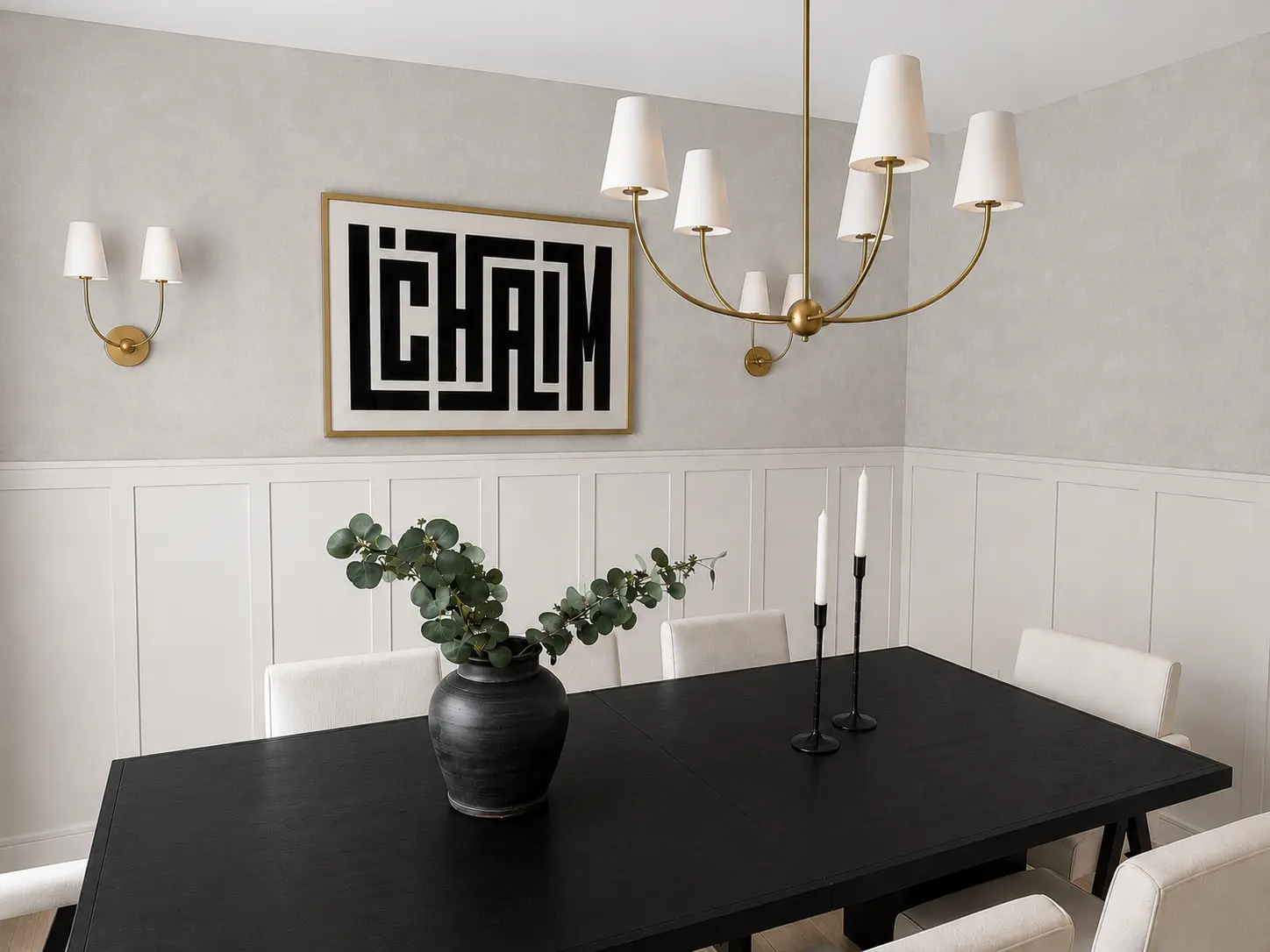 Limewash: dining room above wainscoting — Glen Rock, NJ.
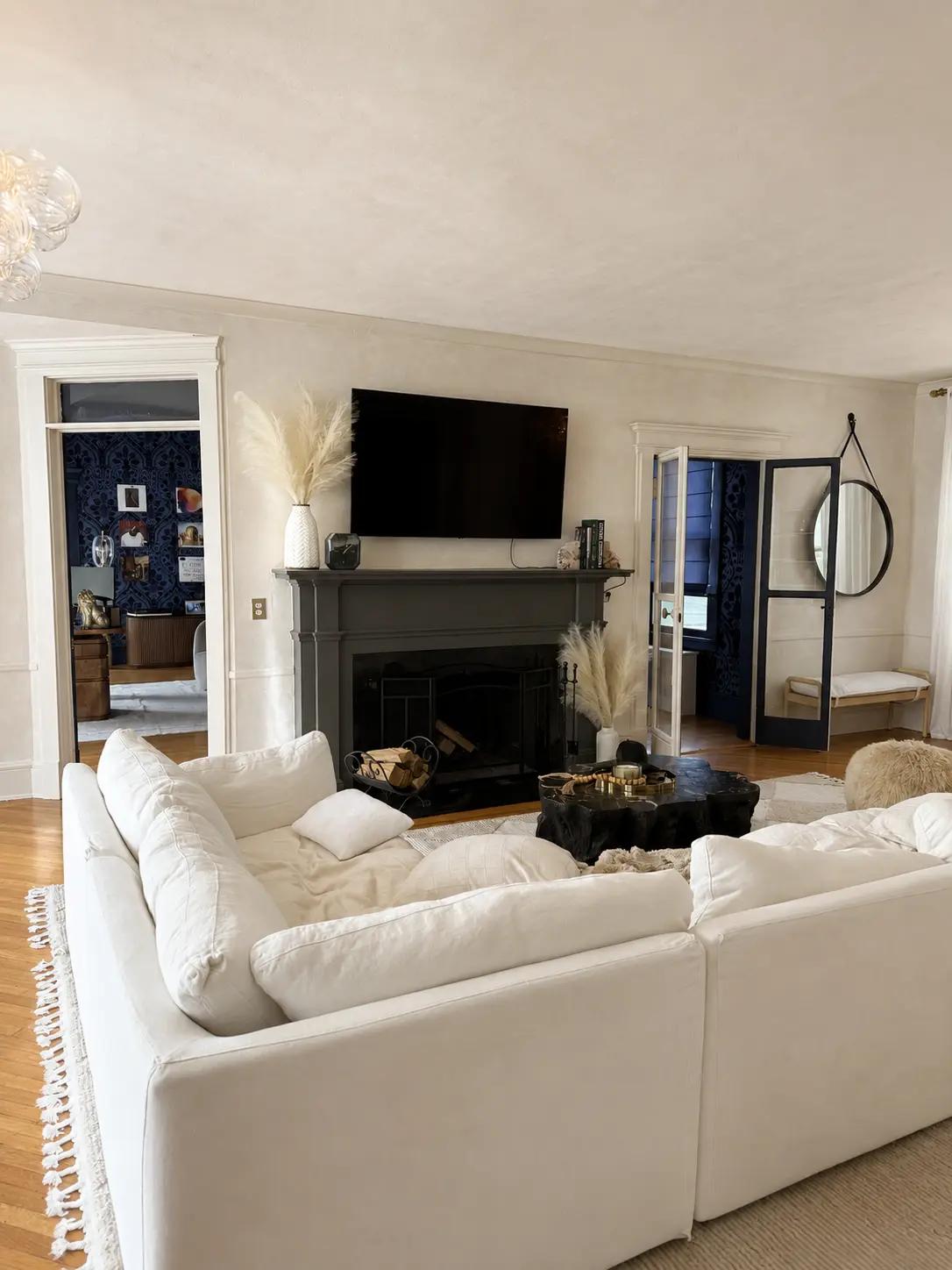 Limewash: living room ceiling — Westfield, NJ.
We don't yet have a completed Roman clay project photographed for publication, so we haven't shown one here. Ask us for a physical sample instead.
Learn more on our limewash painting page, or see limewash in Franklin Lakes, Ridgewood and Montclair.
Frequently Asked Questions
What is the difference between Venetian plaster, Roman clay and limewash?
Venetian plaster is a lime plaster applied in thin, troweled layers and burnished for polished stone-like depth. Roman clay is a trowel-applied lime- or clay-based finish with a soft, matte, suede-like texture. Limewash is a thin mineral coating brushed on in layers, giving a cloudy, chalky movement rather than a troweled texture.
Which finish is the most durable?
Polished Venetian plaster is generally the hardest-wearing of the three once cured and protected, which is why it is often chosen for high-traffic walls, columns and fireplaces. Roman clay and limewash are softer, more matte surfaces that are easier to scuff but are also easy to blend and touch up.
Can any of these finishes go inside a shower?
No. We do not install Venetian plaster, Roman clay or limewash inside showers. For wet areas we recommend a microcement or Tadelakt system designed for that use. Tadelakt is water-repellent when properly installed, not waterproof on its own, and it is not microcement.
Can these finishes be used in a powder room or bathroom outside the shower?
Yes. Powder rooms and bathroom walls outside the splash zone are common places for all three finishes, provided the room is properly ventilated and the right protective topcoat is chosen where splashing is likely.
Can I limewash or plaster over a brick fireplace?
Often, yes. Limewash keeps the brick texture visible and softens the color. Plaster, such as Palladino, can cover the brick for a smooth stone look. We inspect the brick first for sealers, paint or moisture that would affect bonding.
How are touch-ups handled?
Limewash and Roman clay are usually the easiest to blend because of their natural variation. Polished Venetian plaster can be repaired, but matching the burnished sheen takes more skill, so repairs are best done by the original applicator.
Which finish costs the most?
Cost is driven mainly by labor and the number of coats. Polished Venetian plaster typically involves the most coats and burnishing, Roman clay sits in the middle, and limewash is often the most approachable. Surface condition, ceiling height and room size matter as much as the finish itself, so we price every project after seeing it.
Can I see the finish before I commit?
Yes. We recommend a physical sample in your chosen product and color, viewed in your own lighting, before any project begins.
Get a Free Estimate
Not sure which finish fits your room? We'll look at the space, talk through the look you want and bring samples. Call (201) 701-8248, text us photos of the space, or book your free estimate online. Every estimate is free and in writing, with no obligation.
All Time Paint & Plaster Co.1581 Route 23 S, Suite 1, Wayne, NJ 07470NJ HIC #13VH10434100
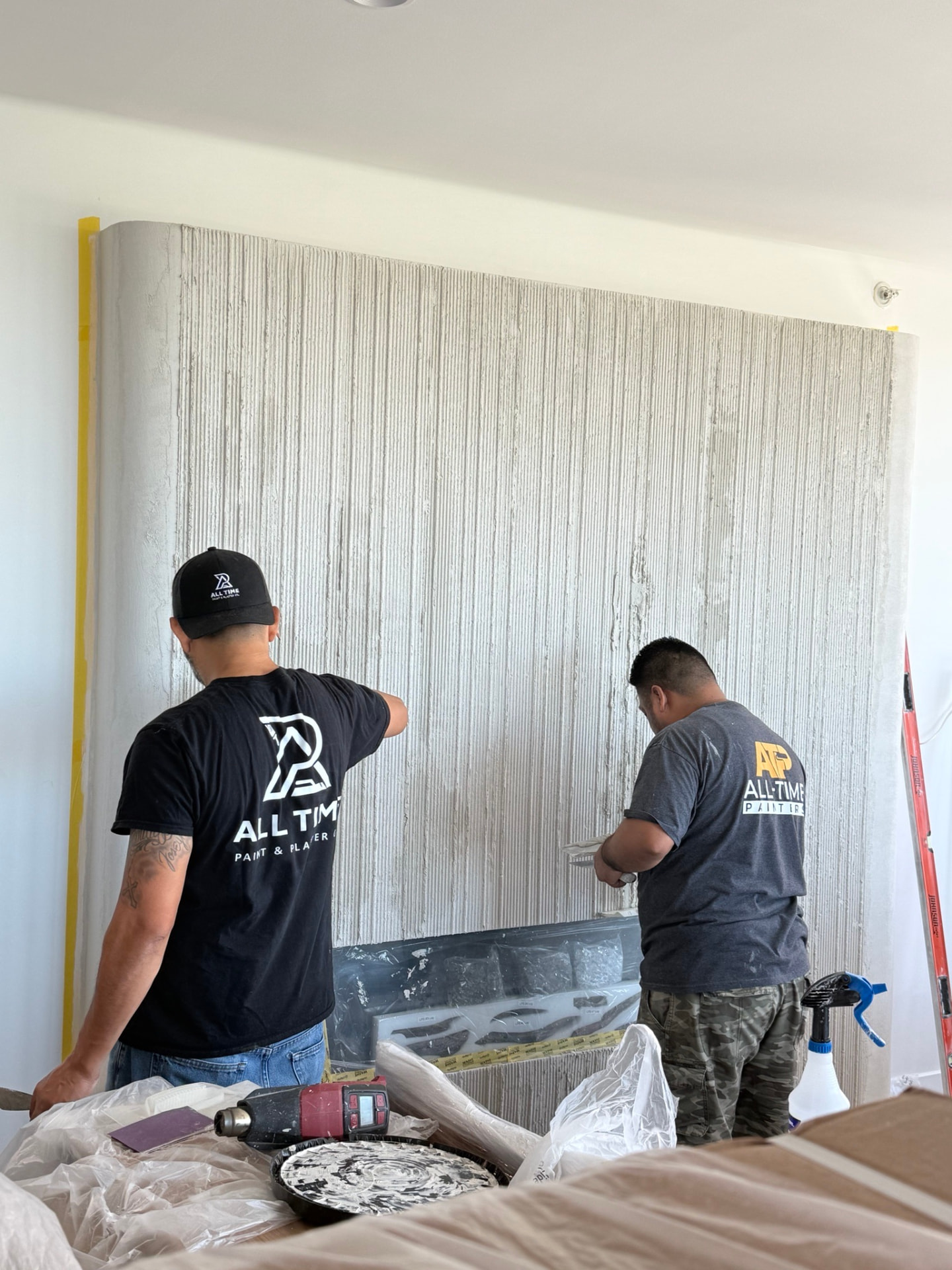 Plaster & Specialty Finishes
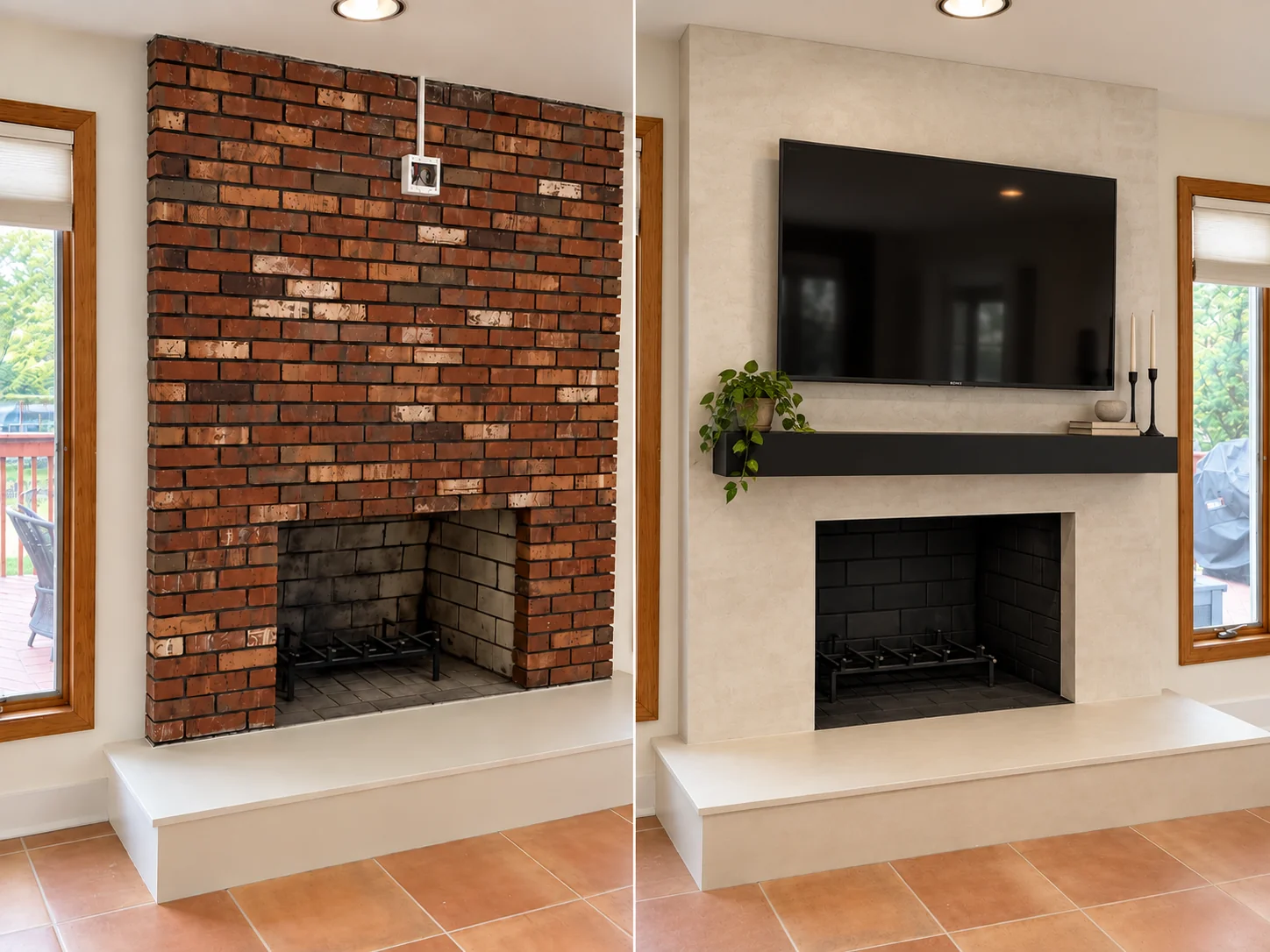 Plaster & Specialty Finishes