
A microcement shower gives you a continuous, grout-free surface across walls, floors, benches and niches. It's one of the most-asked-about finishes at our Wayne studio — and the first question is almost always about cost. This guide explains what actually drives the price of a microcement shower in New Jersey, what our process includes, and how microcement compares with tile and Tadelakt.
We don't list prices or per-square-foot figures here. Every shower is different, so we price each one after an assessment — and that estimate is free.
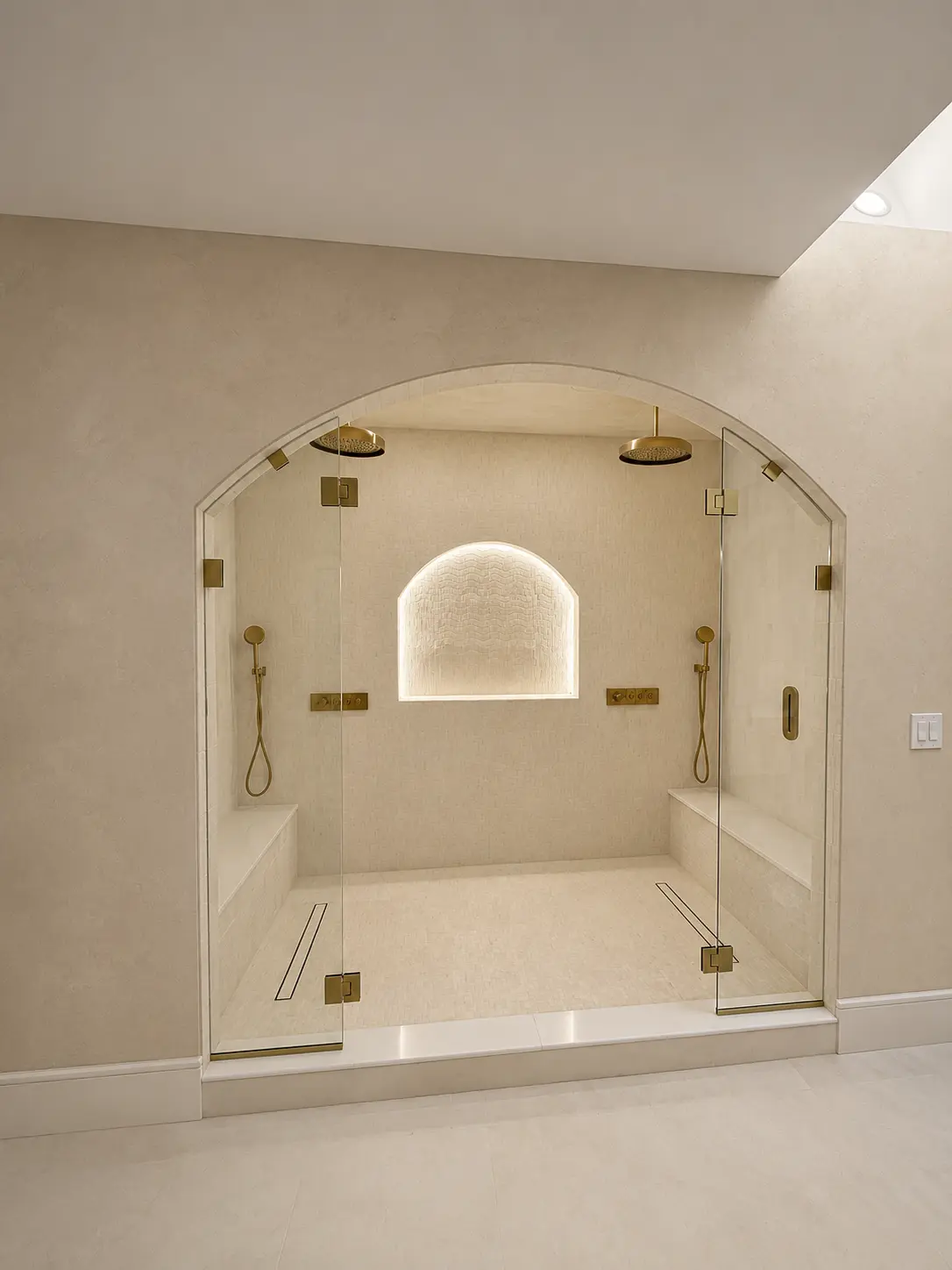 Microcement: arched steam shower with benches — Cedar Grove, NJ.
What Is a Microcement Shower?
Microcement is a thin, hand-applied cementitious decorative finish. In a shower it is installed over a properly prepared, waterproofed substrate to create one continuous surface. Homeowners choose it for the seamless look, for having no grout lines to scrub, and because in many cases it can go over existing, well-bonded tile instead of tearing everything out. Read more on our microcement and Tadelakt showers page.
What Drives the Cost
- Shower size and surface area: more wall, floor and ceiling area means more material and more hand-troweling.
- Existing substrate: sound, well-bonded tile may be prepared and covered; loose tile, damaged backer board or moisture problems mean demolition and rebuilding first.
- Waterproofing system: the membrane and detailing at corners, drains and penetrations are essential and add labor.
- Number of coats and sealer: microcement is built in multiple base and finish coats, followed by a protective sealer system.
- Benches, niches and plumbing: every bench, niche, curb, arch and fixture adds edges and detail work.
- Finish and color: texture, color and level of movement affect technique and time.
Our Process, Step by Step
- Assessment: we inspect the shower, check the existing tile or walls for movement and moisture, and discuss the look you want.
- Preparation: cleaning, repairs, removal where needed, and priming of the substrate.
- Waterproofing: a dedicated waterproofing layer with detailing at seams, corners, drains and valves.
- Base coats: reinforced base layers that build the foundation for the finish.
- Microcement finish coats: thin, hand-troweled decorative layers that create the color and movement.
- Sealer: a protective sealer system suited to wet use.
Timeline: a microcement shower is completed over several working days, because each phase needs proper drying or curing time before the next begins. The exact schedule depends on the shower's size, the substrate, the product system and its curing requirements — we give you a project-specific schedule with your estimate rather than a one-size-fits-all number.
Microcement vs. Tile vs. Tadelakt
| Microcement | Tile | Tadelakt | |
|---|---|---|---|
| Grout maintenance | No grout lines | Grout lines need cleaning and periodic sealing | No grout lines |
| Look | Seamless, modern, subtle movement | Defined pattern and joints | Soft, polished, organic lime finish |
| Water approach | Waterproofing membrane under the finish, plus sealer | Waterproofing behind tile; tile and grout as the surface | Water-repellent lime plaster, soap-polished; depends on proper substrate and waterproofing strategy |
| Renovation disruption | Can often go over sound existing tile | Usually full demolition | Usually requires a new, suitable substrate |
Tadelakt is a traditional lime plaster — it is not microcement, and it is water-repellent rather than waterproof on its own. Venetian plaster, Roman clay and limewash do not belong inside showers; see our finish comparison guide.
Real Shower and Bathroom Projects
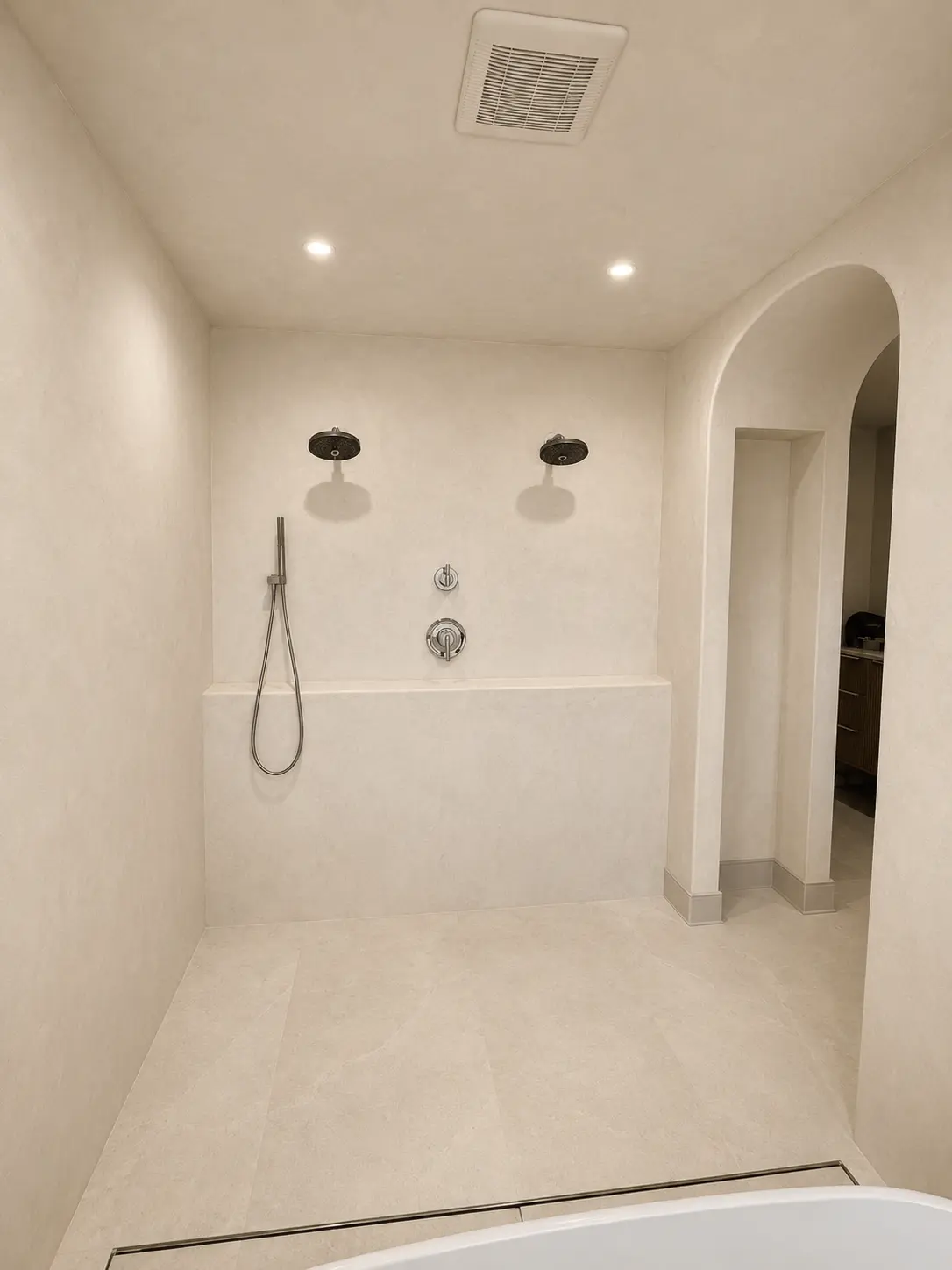 Microcement: wet room with dual rain heads — Wayne, NJ.
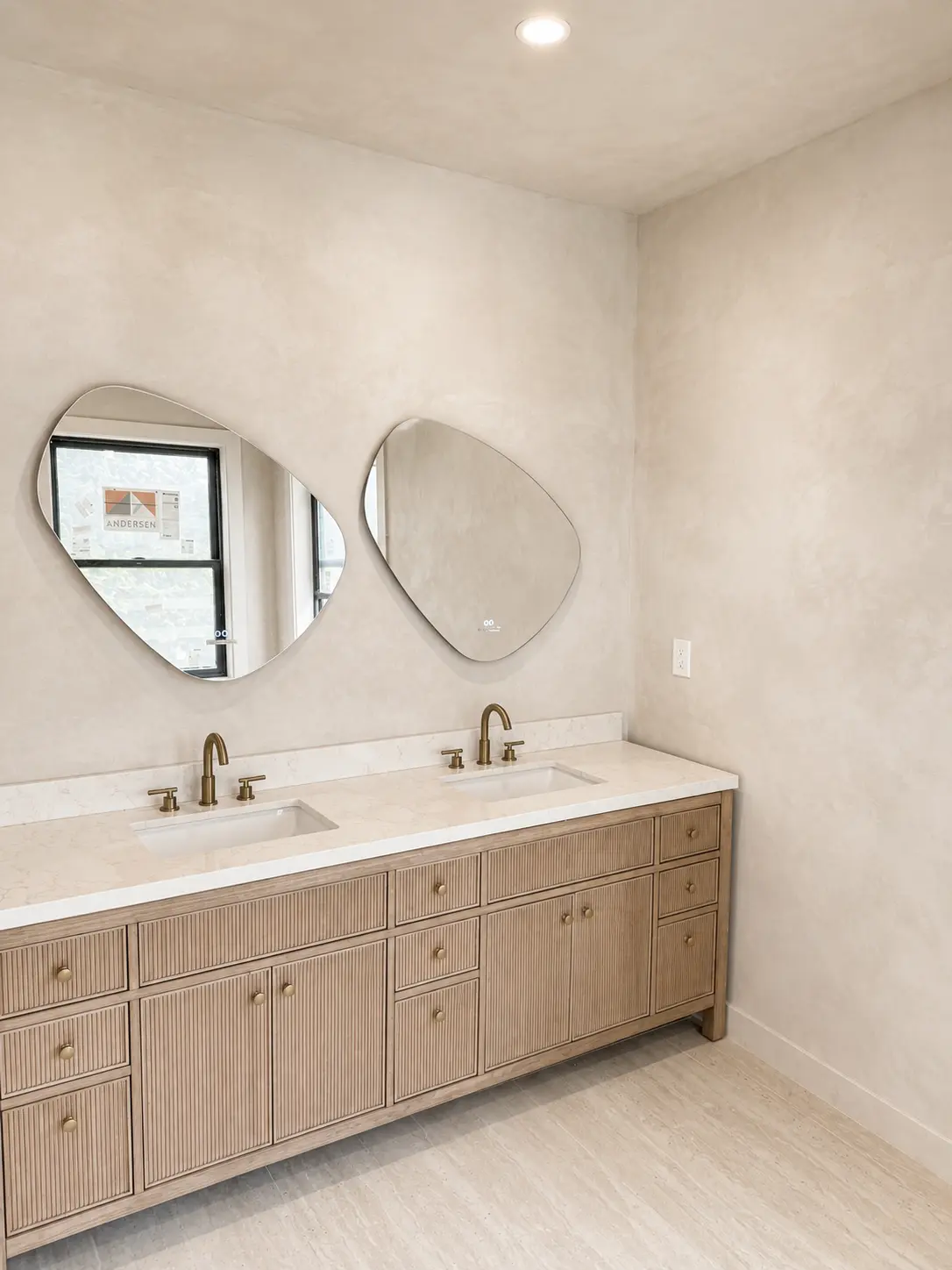 Microcement: bathroom vanity wall — Clifton, NJ.
Planning limewash elsewhere in the home? Read our limewash brick guide.
Frequently Asked Questions
Is a microcement shower waterproof?
Microcement is part of a complete shower system. The waterproofing comes from a dedicated waterproofing layer under the finish, together with proper substrate preparation, compatible primers, the microcement coats and protective sealers. The exact system depends on the product and the shower's construction.
Can microcement go over existing tile?
In many cases, yes — but only if the tile is securely bonded and the substrate is sound. We evaluate the existing tile first. Loose tile, failed grout or moisture behind the wall usually means demolition is needed.
How do you clean a microcement shower?
Use non-abrasive cleaners that are compatible with the sealer, and avoid harsh chemicals and scouring pads that can damage the protective finish.
How long does a microcement shower last?
Lifespan depends on correct installation, a sound substrate, the sealer system and how the shower is cleaned and maintained. Periodic resealing, as recommended by the manufacturer, helps protect the surface.
Can microcement be repaired?
Yes. Small damage can usually be repaired locally. Because microcement is hand-applied, a repair may show slight variation, which is part of the finish's character.
Is microcement slippery?
Shower floors can be finished with a texture and sealer chosen for better grip. We discuss floor slip resistance with you when selecting the system.
Can microcement be used in a steam shower?
Steam showers need extra consideration for heat and vapor. The waterproofing and finish system must be approved for that environment.
How much does a microcement shower cost?
We don't publish a set price, because size, substrate condition, demolition, waterproofing, niches, benches and finish choices change every project. We give a free written estimate after seeing the shower.
Get a Free Estimate
Want to know what your shower would take? Send us photos of the current shower and we'll review the substrate and follow up. Call (201) 701-8248, text us photos of the space, or book your free estimate online. Every estimate is free and in writing, with no obligation.
All Time Paint & Plaster Co.1581 Route 23 S, Suite 1, Wayne, NJ 07470NJ HIC #13VH10434100
 Cost Guides
 Cost Guides